After Dark: How Israeli Museums Are Reinventing the Evening Hours
For most of the twentieth century, the museum was a daytime proposition. You arrived in the morning, you left by late afternoon, and the institution closed its doors to the public as the working day ended. This rhythm suited a particular kind of visitor—the retiree, the student on a school trip, the tourist with a flexible schedule—and largely excluded everyone else.
In Israel, that model is being systematically dismantled. A wave of after-hours programming, evening openings, and nocturnal cultural events is reshaping the relationship between the country's museums and the communities they serve. The results are instructive not only for Israeli institutions but for cultural organizations worldwide that are grappling with declining daytime attendance and the challenge of reaching audiences whose lives don't pause between nine and five.
The Problem That Evening Programming Solves
The challenge is not unique to Israel. Cultural institutions across the United States have spent the past two decades wrestling with the same demographic reality: the visitors most likely to attend a museum on a Tuesday afternoon are increasingly a narrow slice of the broader public. Working adults, young professionals in their twenties and thirties, families with school-age children constrained by weekday schedules—these groups are structurally excluded from the conventional museum day.
Evening programming addresses this structural exclusion directly. By extending or shifting access to hours when working adults are actually free, museums transform themselves from institutions that are theoretically open to everyone into institutions that are practically accessible to a far wider range of people.
In Israel, this logic has been amplified by a specific demographic reality: the country has a large and culturally active young adult population, a significant international tourist presence concentrated in urban centers, and a climate that makes evening outdoor events genuinely pleasant for a substantial portion of the year. These factors have combined to make after-hours programming not merely a nice-to-have but a genuine strategic opportunity.
Nights at the Tower, Stars Over the Negev
Some of the most compelling examples of Israeli after-hours programming are built around the country's archaeological sites—places where the physical environment itself becomes a theatrical asset after dark.
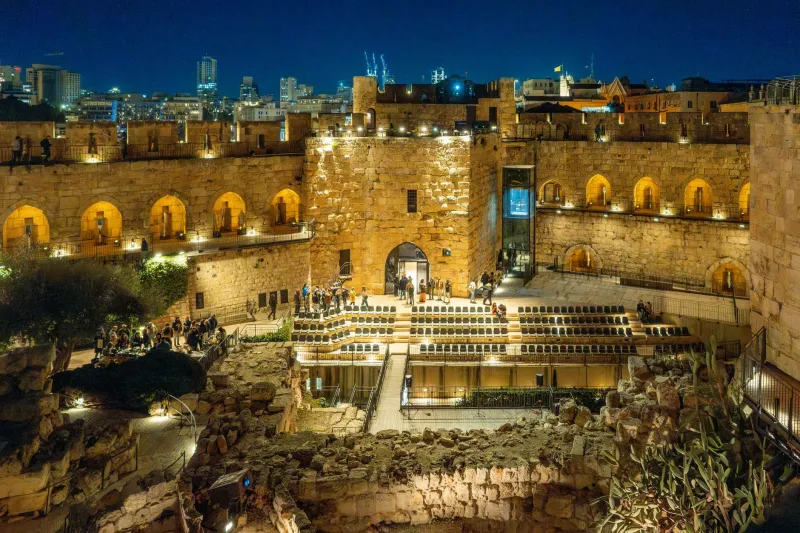
The Tower of David Museum in Jerusalem has developed an internationally recognized nighttime sound-and-light show that projects the history of the city across the ancient citadel's stone walls. The experience, which runs throughout the evening hours, has become one of the most attended cultural events in the city, drawing audiences that include both tourists and local residents who might visit the museum's conventional exhibitions far less frequently. The show is not a substitute for the museum's scholarly programming—it is a gateway to it, a sensory introduction that sends visitors back to the galleries the following morning with a different quality of attention.
In the Negev, the ancient Nabataean city of Avdat—a UNESCO World Heritage Site—has experimented with guided evening tours that use the desert's exceptional atmospheric clarity to connect visitors to the ancient trade routes that once crossed the region by night. The programming draws on archaeoastronomical research to situate the site within the navigational knowledge of the people who built it, transforming a conventional archaeological visit into something closer to a meditation on time and space.
Urban Institutions and the Late-Night Audience
In Tel Aviv—a city with one of the most active nighttime cultures in the Middle East—several institutions have developed programming explicitly designed to meet visitors where they already are: out, social, and looking for experiences that combine intellectual engagement with a degree of atmosphere.
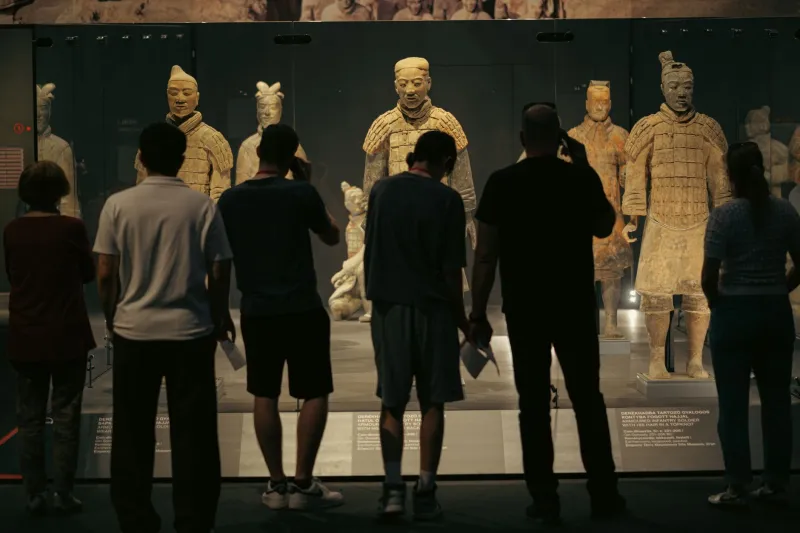
The Tel Aviv Museum of Art has hosted late-night openings tied to specific exhibitions, extending access until ten or eleven in the evening and pairing the extended hours with live music, curator-led talks, and bar service. The format, familiar to American visitors who have attended similar events at institutions like the Museum of Modern Art or the Art Institute of Chicago, has proven consistently popular in the Tel Aviv context—but with a local inflection. The conversations that happen in the galleries during these evenings tend to be notably less reverential than those in conventional museum hours, reflecting a cultural disposition toward direct engagement and debate that characterizes Israeli public discourse more broadly.
The result, museum staff report, is a different kind of visitor relationship—one characterized by greater willingness to challenge interpretive choices, ask unconventional questions, and treat the exhibition as a starting point for argument rather than a terminus of authoritative information.
What Institutions Are Learning
The data emerging from Israeli after-hours programs is beginning to complicate some longstanding assumptions about museum audiences. Evening visitors, it turns out, do not simply replicate the behavior of daytime visitors at a different hour. They move through galleries differently—more slowly in some cases, more socially in others—and they engage with interpretive materials in ways that suggest a different quality of attention.
Several institutions have noted that evening visitors ask more questions of gallery staff than their daytime counterparts, a finding that may reflect the more relaxed social atmosphere of the evening context or may indicate that the demographic drawn to after-hours events is simply more accustomed to seeking dialogue. Either way, it has prompted some institutions to rethink their staffing models for evening hours, moving away from security-focused presence toward a more guide-oriented approach.
There is also emerging evidence that evening visitors are more likely to make return visits within a short time frame—a finding that challenges the assumption that the museum visit is a one-time event and suggests that after-hours programming may be building a more habitual relationship with cultural institutions among younger audiences.
A Model Worth Watching
For American museum professionals, the Israeli experience with after-hours programming offers both inspiration and a set of practical lessons. The most significant is perhaps the simplest: the museum's physical and intellectual resources do not diminish after dark. What changes is the audience, and with it, the character of the encounter.
Institutions that are willing to adapt their programming, their staffing, and their institutional self-understanding to this different audience are discovering that the evening hours are not a compromise of the museum's mission—they are an extension of it. In Israel, where the past is never merely the past and where cultural institutions carry a particular weight of national and communal significance, the willingness to open the doors after dark is, in its own way, a statement about who the museum believes it is for.