Where Artifacts Meet Inquiry: How Israeli Museums Are Redefining the Classroom Experience
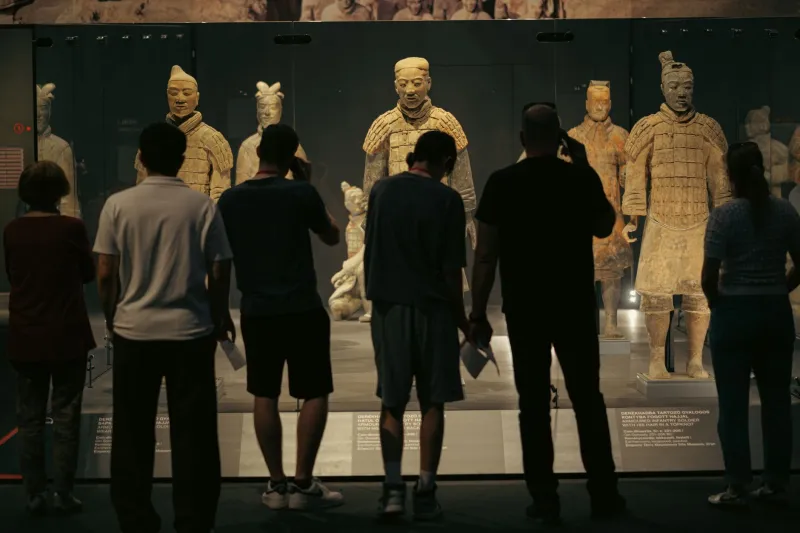
For decades, the standard school visit to a museum followed a familiar script: a guided walk through galleries, a brief lecture from a docent, and perhaps a worksheet to complete on the bus ride home. That model, while well-intentioned, rarely left a lasting impression. In Israel, a growing number of museums have decided that passive observation is no longer sufficient — and they are building something considerably more ambitious in its place.
Across the country, institutions ranging from major urban cultural centers to smaller regional museums are reframing their role in society. Rather than serving as repositories that schools occasionally visit, they are positioning themselves as active educational partners — collaborators in curriculum design, co-authors of learning outcomes, and spaces where inquiry, rather than memorization, takes center stage.
Moving Beyond the Field Trip
The shift in approach is not merely cosmetic. Israeli museums have invested substantially in developing structured educational frameworks that align with national curriculum standards while offering experiences that classrooms simply cannot replicate. The Israel Museum in Jerusalem, widely regarded as the country's flagship cultural institution, has been at the forefront of this transformation. Its education department works directly with teachers in advance of school visits to co-design learning sequences that connect gallery content to classroom objectives. Students arrive not as passive observers but as active investigators, assigned specific questions to explore and artifacts to examine before the group discussion begins.
This preparation-first model has proven particularly effective with younger students. When children arrive knowing what they are looking for — a specific motif in ancient pottery, evidence of trade routes in jewelry design, or the narrative logic of a mosaic — their engagement with the physical objects deepens considerably. Teachers who have participated in these programs report that students retain information far more effectively than they do from textbook-based instruction alone.
Hands-On History at the Hecht Museum
At the University of Haifa's Hecht Museum, educational programming has taken on a distinctly tactile character. The museum houses one of Israel's most significant collections of ancient seafaring artifacts, including the remains of a Canaanite merchant ship dating to the fourteenth century BCE. Rather than simply displaying these objects behind glass, the museum has developed a curriculum module that invites students to handle replica cargo containers, analyze trade goods, and reconstruct hypothetical voyages using maps and period-accurate navigational tools.
For American educators accustomed to the constraints of standardized testing and tightly managed classroom time, this kind of experiential learning might seem like a luxury. But the Hecht's education team argues that the opposite is true — that hands-on engagement with primary sources accelerates conceptual understanding and builds the kind of critical thinking skills that transfer directly to academic performance. Several Israeli schools that have participated in multi-visit programs with the museum have reported measurable improvements in students' ability to analyze historical evidence across subjects.
Storytelling as a Pedagogical Tool
Not every lesson is delivered through artifacts. The Eretz Israel Museum in Tel Aviv has developed a series of storytelling-based programs that use narrative as a bridge between historical content and student experience. Trained educators guide students through dramatized encounters with figures from the ancient world — a Roman-era merchant, a Byzantine mosaic craftsman, a medieval Jewish scholar — inviting students to ask questions, challenge assumptions, and draw connections to contemporary life.
This approach is particularly well-suited to mixed-ability classrooms, where students with different learning styles can engage with the same material through different entry points. Visual learners respond to the museum's gallery environments; auditory learners are drawn into the storytelling sessions; kinesthetic learners gravitate toward the hands-on workshops that accompany each program. The result is an inclusive educational model that Israeli schools have embraced with notable enthusiasm.
Adult Learning and Lifelong Engagement
Israeli museums have not limited their educational ambitions to the K-12 sector. A number of institutions have developed robust programming for adult learners, recognizing that curiosity about history and culture does not expire at graduation. The Diaspora Museum — now operating under its updated identity as ANU – Museum of the Jewish People — has built a suite of adult education programs that draw heavily on personal and family history as a framework for exploring broader historical narratives.
Participants in these programs are encouraged to bring their own documents, photographs, and family stories into dialogue with the museum's collections. A grandmother's immigration papers become a lens through which to examine the history of the Jewish diaspora. A grandfather's military correspondence opens a conversation about the founding of the State of Israel. This deeply personal approach to museum learning has resonated strongly with older visitors, many of whom describe the experience as transformative in ways that conventional museum visits rarely achieve.
Collaborating with Educators to Shape Curriculum
Perhaps the most significant development in Israeli museum education is the growing practice of genuine curriculum co-development. Rather than creating programs in isolation and then marketing them to schools, a number of institutions have begun inviting teachers into the design process from the outset. The Rockefeller Archaeological Museum in Jerusalem, for example, convenes annual working groups that bring together museum educators, classroom teachers, and curriculum specialists to develop learning materials that are both pedagogically sound and rooted in the museum's collections.
The outputs of these collaborations are not simply worksheets or activity guides. They include full unit plans, assessment frameworks, and teacher training modules — resources substantial enough to stand alongside commercially published curriculum materials. Schools that have adopted these units report that students demonstrate stronger engagement with historical content and greater willingness to engage with primary sources as evidence, rather than treating history as a fixed body of facts to be memorized.
A Model Worth Watching
For American museum professionals and educators, the Israeli approach to museum-based learning offers a genuinely instructive model. The emphasis on curriculum alignment, teacher collaboration, and multi-modal learning reflects a sophisticated understanding of how people actually acquire knowledge — and a willingness to invest the institutional resources necessary to support that understanding in practice.
Museums in the United States have long aspired to be more than passive repositories, but the gap between aspiration and execution can be considerable. What Israeli institutions demonstrate is that closing that gap requires not just creative programming but structural commitment: dedicated education departments, sustained relationships with schools, and a willingness to measure success not by visitor numbers alone but by the depth and durability of learning that takes place within museum walls.
As the field continues to evolve, Israel's museums offer a compelling case study in what becomes possible when cultural institutions decide that education is not an add-on to their core mission — but the mission itself.