Rebuilding What War Erased: How Israeli Museums Are Harnessing Technology to Reclaim Shattered Heritage
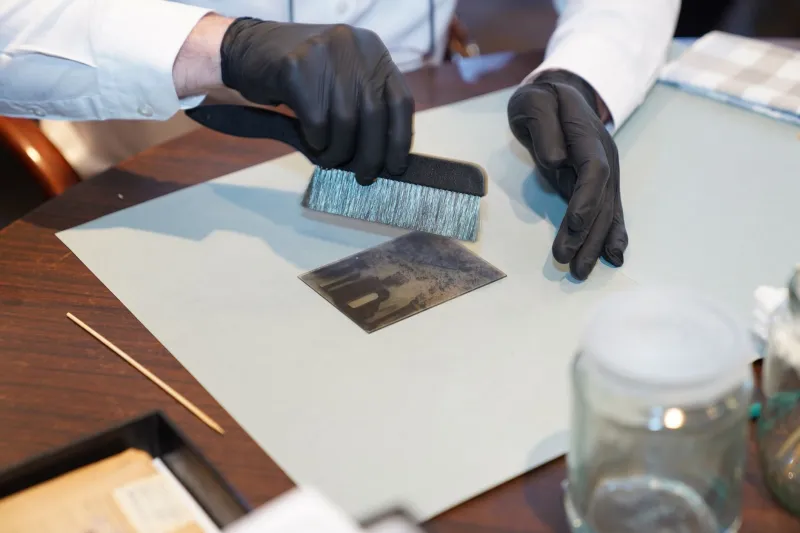
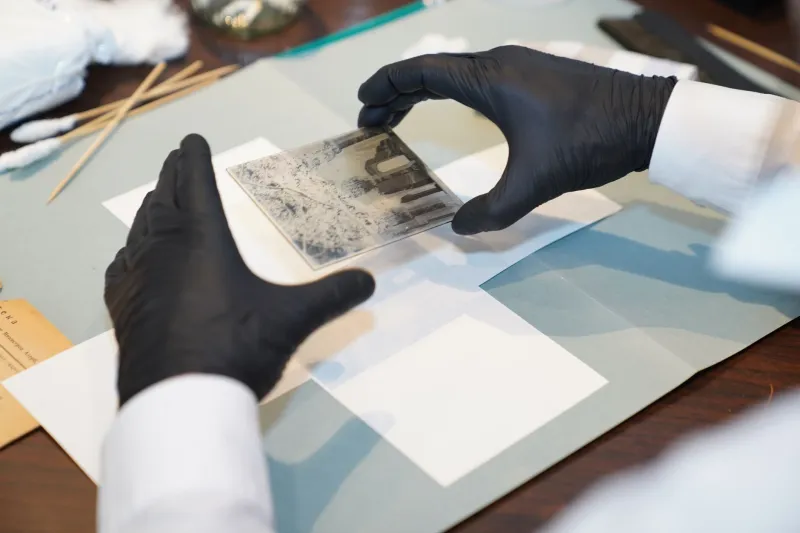
For most American museum visitors, the word "restoration" conjures images of white-gloved conservators delicately cleaning oil paintings or stabilizing ancient ceramics in climate-controlled laboratories. In Israel, however, restoration has taken on an altogether different urgency. Here, cultural institutions are actively working to reconstruct heritage that has been deliberately destroyed, violently displaced, or fragmentarily scattered across borders by decades of regional conflict. The tools they employ are as sophisticated as anything found in Silicon Valley—and the stakes could not be higher.
When Artifacts Become Casualties of Conflict
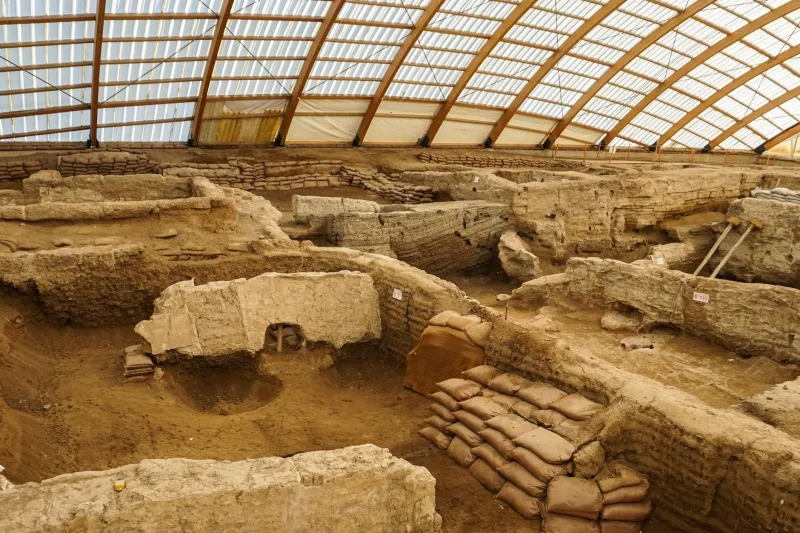
The destruction of cultural heritage during armed conflict is not a new phenomenon, but the pace and scale of such losses across the broader Middle East in recent decades has been staggering. Sites in Syria, Iraq, and Gaza have suffered catastrophic damage, leaving scholars and institutions scrambling to preserve what documentation exists before memory itself fades. Israeli museums, positioned at the geographic and intellectual crossroads of this crisis, have emerged as unexpected but formidable players in the global effort to recover what has been lost.
The Israel Antiquities Authority, in partnership with several major Israeli universities and international institutions, has been at the forefront of deploying photogrammetric scanning—a process that constructs precise three-dimensional digital models from overlapping photographs—to document fragile or damaged objects before further deterioration occurs. This technique, once reserved for aerospace engineering and film production, has found a natural home in the cultural preservation field. A single afternoon of scanning can produce a digital record accurate to fractions of a millimeter, effectively creating an immortal twin of even the most fragile artifact.
The Role of Artificial Intelligence in Reassembly
Perhaps the most arresting development in this field is the application of artificial intelligence to what conservators call "virtual reassembly." Anyone who has attempted a jigsaw puzzle with thousands of pieces can appreciate the challenge of reconstructing a mosaic floor or inscribed tablet shattered into hundreds of fragments. Human experts, working by hand and eye, might spend years on such a project. AI-assisted platforms, trained on vast libraries of artifact imagery, can propose matches between fragments in a fraction of the time.
Researchers at the Hebrew University of Jerusalem have collaborated with computer scientists to develop algorithms capable of analyzing the fracture patterns, surface textures, and decorative motifs of broken ceramic and stone objects. The system does not replace human expertise—curators and archaeologists remain essential to validating every proposed match—but it dramatically accelerates the process and surfaces connections that fatigued human eyes might overlook. For American visitors familiar with the way streaming platforms recommend films based on viewing history, the underlying logic is not entirely dissimilar: pattern recognition applied at extraordinary scale.
Virtual Reconstruction and the Question of Authenticity
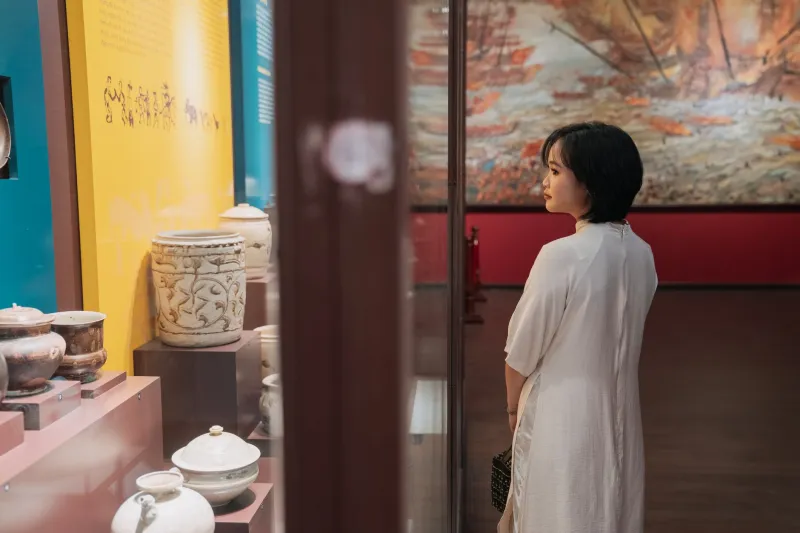
Beyond the laboratory, Israeli museums are grappling with a deeper philosophical question: when a physical artifact cannot be recovered or fully restored, what does it mean to reconstruct it digitally? The Yad Ben Zvi Institute in Jerusalem and the Tower of David Museum have both experimented with immersive virtual reality environments that allow visitors to "walk through" spaces that no longer exist in their original form, or that exist only in fragments. These experiences are carefully distinguished from the physical collections on display—institutions are scrupulous about labeling virtual reconstructions as interpretive rather than documentary—but they offer something genuinely new: the ability to experience cultural heritage that would otherwise be entirely inaccessible.
This approach has particular resonance for American audiences, many of whom first encountered the concept of "lost heritage" through news coverage of the Islamic State's destruction of Palmyra or the looting of the Iraq Museum in Baghdad. Virtual reconstruction does not erase the tragedy of those losses, but it insists that the cultural knowledge embedded in those sites need not be lost entirely.
Case Study: Fragments from the Margins
One of the most compelling ongoing projects involves a collection of inscribed stone fragments that arrived in Israel through a complex chain of acquisition and donation, their precise origins disputed and their original context partially reconstructed through archival research. Conservators at a Tel Aviv–based institution, working alongside epigraphers and digital imaging specialists, have used multispectral photography—a technique that captures light beyond the visible spectrum—to reveal inscriptions that are invisible to the naked eye. Letters and symbols erased by centuries of weathering or deliberate defacement have emerged from the stone's surface like a message recovering its voice.
The project is not without its complications. Questions of provenance, legal ownership, and the ethics of displaying objects whose origins remain partially unclear are debated openly within the institution, reflecting a broader commitment to transparency that American visitors will find refreshing. The museum publishes its methodology and its uncertainties alongside its findings, treating the public as capable of engaging with ambiguity rather than demanding false certainty.
Resilience as a Museum Mission
What distinguishes the Israeli approach to conflict-zone heritage recovery is not merely the sophistication of its technology but the institutional philosophy that underlies it. Several leading Israeli museums have formally incorporated cultural resilience into their mission statements—acknowledging that in a region where political circumstances can change rapidly, the preservation of cultural memory is itself a form of civic responsibility.
This framing will resonate with American visitors who have observed their own country's ongoing debates about what belongs in museums, whose stories are told, and who bears responsibility for cultural stewardship. Israeli institutions are navigating analogous questions under considerably more acute pressure, and the solutions they are developing—transparent methodology, collaborative international partnerships, and a willingness to embrace technological innovation without abandoning scholarly rigor—offer lessons that extend well beyond the region.
Planning a Visit with This Work in Mind
For travelers interested in witnessing this work firsthand, several Israeli institutions offer behind-the-scenes conservation tours and dedicated exhibition spaces where digital reconstruction projects are explained and demonstrated. The Israel Museum in Jerusalem regularly features installations that illuminate its conservation and documentation processes, while the Rockefeller Archaeological Museum provides context for the broader regional heritage landscape. Visitors are encouraged to check current exhibition schedules and tour availability in advance, as programming in this area evolves frequently.
The experience of watching a shattered past reassemble itself—fragment by fragment, pixel by pixel—is one that American visitors are unlikely to find replicated anywhere else with quite the same combination of urgency, expertise, and intellectual honesty. In Israeli museums, the art of reconstruction is not a metaphor. It is the work of every day.