From the Ground Up: Understanding How Israeli Museums Build Their Collections and Why Provenance Matters
When an American visitor stands before a Bronze Age oil lamp at the Israel Museum in Jerusalem or pauses at a Canaanite fertility figurine in Haifa's National Maritime Museum, the natural impulse is to wonder at the object's age. Far fewer visitors pause to ask an equally important question: How did this artifact get here? That question—deceptively simple on the surface—opens onto a landscape of archaeology, international law, diplomatic negotiation, and ethical commitment that defines how Israeli institutions build and maintain their celebrated collections.
The Legal Architecture Behind Every Acquisition
Israel operates under one of the more rigorous antiquities frameworks in the world. The Antiquities Authority, established under the 1978 Antiquities Law, governs excavation permits, oversees licensed digs, and maintains the State Treasury of Antiquities—a repository that feeds material into public museum collections. Unlike the relatively permissive antiquities markets that flourished in earlier decades, contemporary Israeli law requires that any object found within the country's borders belongs, by default, to the state. Private ownership of newly discovered artifacts is not permitted, and museums seeking to display such material must work directly through official channels.
For American visitors accustomed to the comparatively market-driven approach of some US institutions, this distinction is significant. It means that the majority of objects in major Israeli public museums arrived through documented excavations rather than dealer networks—a provenance trail that, while not without its own complications, offers a degree of accountability that is increasingly valued in the international museum community.
Excavation as the Primary Source
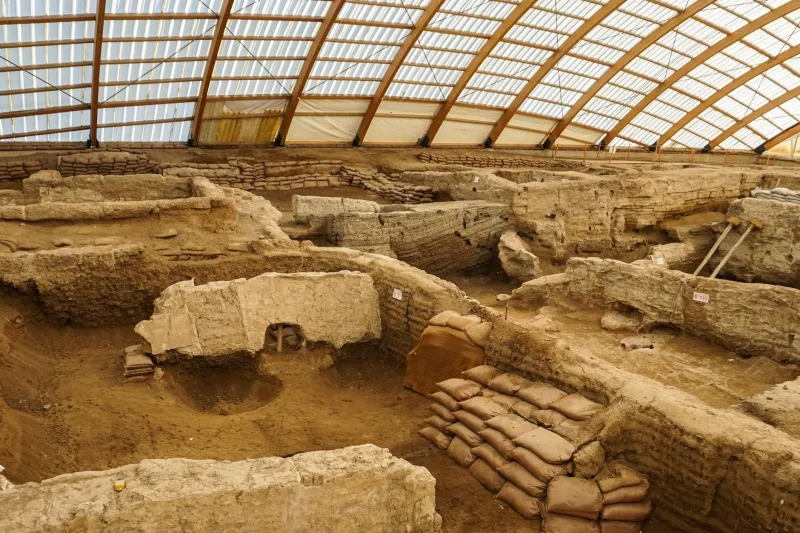
The backbone of Israeli museum collections is licensed archaeological fieldwork. The Israel Antiquities Authority issues permits to universities, research institutions, and international academic teams who conduct systematic digs at registered sites. Objects uncovered during these excavations are catalogued, studied, and eventually allocated to appropriate institutions based on thematic relevance, preservation capacity, and regional significance.
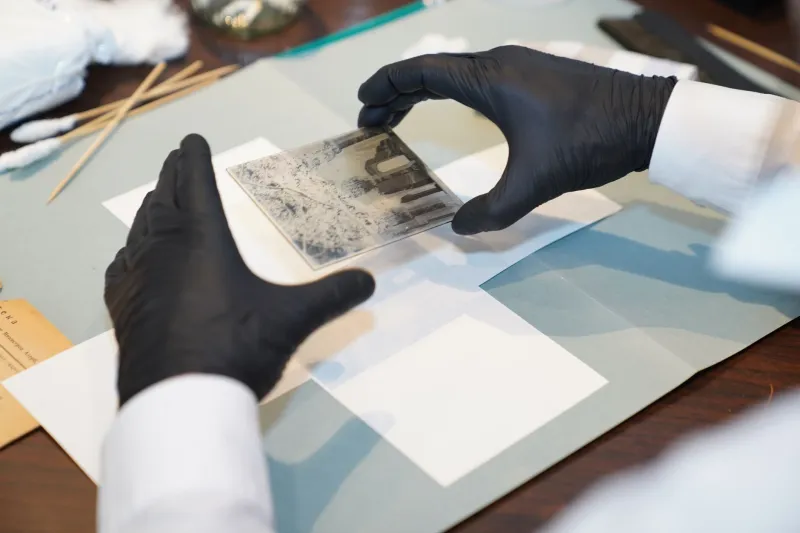
This process is neither fast nor straightforward. An artifact might spend years in a conservation laboratory before it is deemed stable enough for public display. Curators at institutions such as the Rockefeller Archaeological Museum in Jerusalem—which houses one of the country's most comprehensive pre-state collections—work closely with conservators and archaeologists to establish not only an object's physical condition but also its contextual meaning. Where was it found? In what stratigraphic layer? Alongside what other material? These questions determine how the artifact is interpreted for visitors and scholars alike.
For American museum professionals and academic travelers, this methodology will feel familiar: it mirrors the standards promoted by the Society for American Archaeology and the ethical guidelines endorsed by institutions such as the Smithsonian. The shared framework reflects decades of international dialogue about responsible fieldwork.
The Provenance Problem: Confronting a Complex Past
Not every object in an Israeli museum arrived through a clean, documented chain. Like virtually every major collecting institution in the world, Israeli museums hold some material acquired during periods when international standards were less stringent—objects purchased from dealers, donated by private collectors, or transferred through colonial-era agreements that would not pass contemporary ethical review.
Israeli institutions have increasingly confronted this legacy with transparency. Provenance research units—staffed by historians, archivists, and legal specialists—are now standard features at the country's leading museums. Their work involves cross-referencing acquisition records against wartime looting databases, colonial-era export registers, and the Art Loss Register maintained in London. When gaps or red flags emerge, institutions are expected to engage in good-faith dialogue with claimant communities or nations.
This is not merely an academic exercise. The outcomes of provenance investigations have real consequences: repatriation agreements, revised display labels, the removal of objects from galleries pending further research, or the establishment of joint stewardship arrangements with source communities. American visitors who have followed debates over the repatriation of Native American objects under NAGPRA, or the ongoing controversies surrounding the Elgin Marbles and their global equivalents, will recognize the moral terrain immediately.
International Negotiations and Diplomatic Dimensions
Beyond domestic excavation, Israeli museums occasionally pursue acquisitions through international channels—purchasing objects at auction, accepting loans that may convert to gifts, or negotiating long-term lending arrangements with foreign institutions. Each of these pathways carries its own set of ethical and legal considerations.
Auction acquisitions, in particular, attract scrutiny. The international art market has historically been a conduit for illicitly excavated material, and reputable institutions now conduct due diligence before bidding. Israeli museums participating in major auction houses are expected to verify that objects on offer appear in pre-1970 records—the benchmark year established by the 1970 UNESCO Convention on the Means of Prohibiting and Preventing the Illicit Import, Export and Transfer of Ownership of Cultural Property, a treaty to which Israel is a signatory.
Diplomatic relationships also shape what enters Israeli collections. Agreements with Jordan, Egypt, and the Palestinian Authority—where they exist—can facilitate cooperative research and, occasionally, the transfer of material for exhibition. These arrangements are as much about political relationship-building as they are about cultural stewardship, and they underscore the degree to which museum acquisitions in this region are never entirely divorced from geopolitics.
What the Gaps Tell Us
Perhaps the most instructive aspect of any museum collection is not what is displayed but what is absent. Gaps in Israeli collections often reflect contested ownership claims, unresolved repatriation requests, or the deliberate exclusion of material whose provenance cannot be adequately established. For the thoughtful visitor, these absences are as meaningful as the objects themselves.
Some institutions have begun addressing this directly. Interpretive labels that acknowledge uncertainty, digital archives that document the provenance research process, and public programming that invites visitors into the ethical debates surrounding acquisition all contribute to a more honest museum experience. The Israel Museum's commitment to publishing its provenance database online is one example of this transparency in practice—a resource that American researchers and journalists have found particularly valuable.
Why This Matters to the American Visitor
Understanding acquisition practices transforms a museum visit from passive observation into active engagement. When you know that the ceramic vessel before you was excavated by a licensed team from the Hebrew University, catalogued by the Israel Antiquities Authority, and allocated to the current institution after years of study, you are not simply looking at an old object. You are reading the outcome of a system designed—imperfectly but earnestly—to balance public access, scholarly integrity, and ethical responsibility.
For American travelers, many of whom come from a cultural context shaped by debates over museum ethics and repatriation, Israeli institutions offer a compelling case study. The country's legal framework, its active provenance research programs, and its ongoing negotiations with neighboring nations and international bodies all reflect a museum culture that takes these questions seriously. Engaging with that culture—asking curators about acquisition histories, reading provenance notes alongside object labels, attending public lectures on collection ethics—enriches the visit immeasurably.
The artifacts in Israel's museums are extraordinary. But the stories of how they arrived there are, in their own way, equally remarkable.