Beneath the Surface: How Israeli Museum Conservators Are Giving Ancient Artifacts New Life
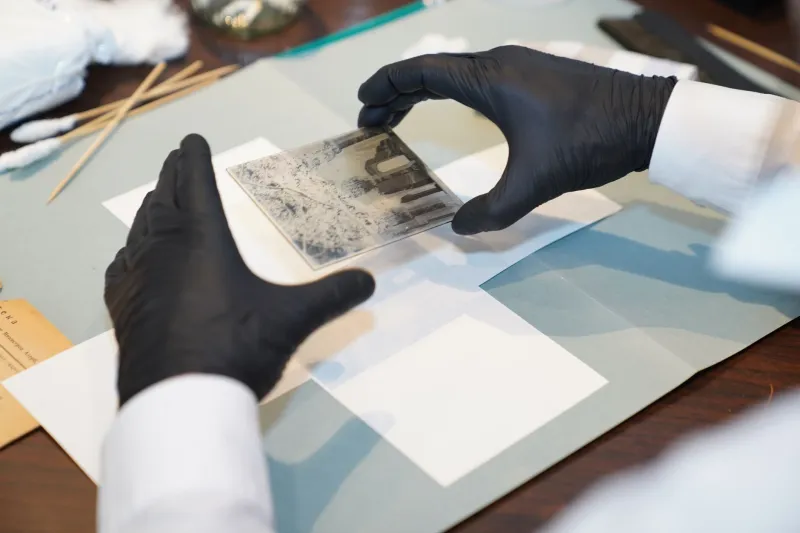
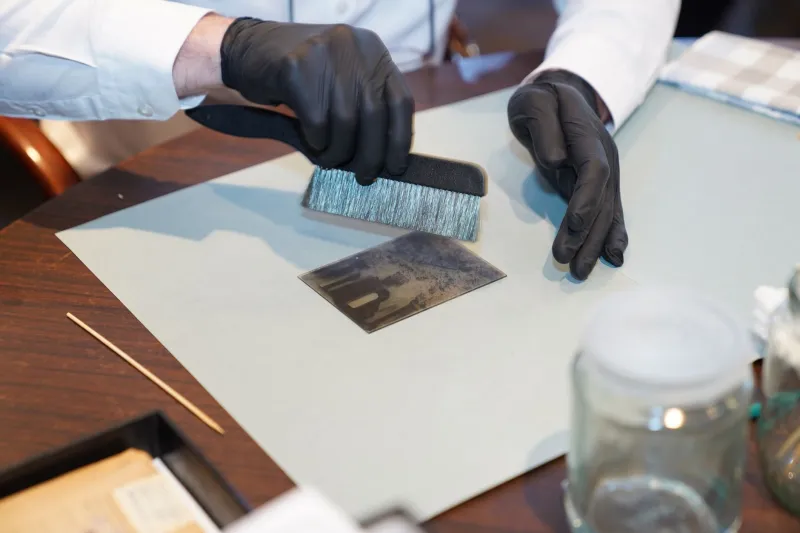
Most visitors to Israel's great museums pause before a Roman-era glass vessel or a Bronze Age clay lamp and think, if they think about it at all, that the object has simply endured. In reality, what stands behind the glass is frequently the product of months, sometimes years, of painstaking intervention by conservators who occupy some of the most specialized roles in the museum world. Their laboratories — tucked behind staff-only corridors, away from the visitor galleries — are where science, history, and craft converge in ways that rarely receive the attention they deserve.
What Conservation Actually Means
The term "restoration" is commonly used, but professional conservators are careful to distinguish between two related but philosophically distinct activities. Preservation aims to stabilize an object and arrest further deterioration without altering its appearance. Restoration, by contrast, involves actively returning an object closer to an earlier state — filling lacunae in a mosaic, for instance, or consolidating flaking pigment on a painted wooden panel. Both disciplines operate under an overriding ethical principle: reversibility. Any intervention made today must be undoable by a future conservator working with better tools or greater knowledge.
At the Israel Museum in Jerusalem, the Weisbord Conservation Laboratory handles materials ranging from ancient papyrus to twentieth-century oil paintings. Staff there employ a battery of non-invasive analytical techniques before a single instrument touches an artifact. X-ray fluorescence mapping can identify the elemental composition of a corroded bronze figurine without removing so much as a flake of patina. Multispectral imaging reveals underdrawings beneath painted surfaces and exposes texts that have faded to invisibility under ordinary light. Only after this diagnostic phase does the conservator begin to plan a treatment strategy.
The Science Behind the Craft
Israel's archaeological record is unusually demanding for conservators. The country's diverse climate zones — Mediterranean coastline, arid Negev desert, the hyper-saline environment around the Dead Sea — mean that objects recovered from different sites present radically different preservation challenges. Organic materials such as leather, linen, and wood that survive in the extreme aridity of the Judean Desert caves require humidity-controlled environments and specialized consolidants that will not introduce damaging salts. Metals recovered from coastal or marine contexts, by contrast, often carry chloride compounds deep within their crystalline structure; left untreated, these compounds will continue to corrode the object long after it has been removed from the ground.
The conservation department at the Israel Antiquities Authority, which oversees finds from hundreds of ongoing excavations across the country, has developed particular expertise in treating the Dead Sea Scrolls fragments. Working under controlled atmospheric conditions, conservators use micro-spatulas, fine brushes, and occasionally a breath of humidified air to coax rolled or compressed fragments open without fracturing the brittle parchment. The process of unrolling a single small fragment can occupy a conservator for an entire working week.
Case Study: A Mosaic Returned to Wholeness
One of the more visually dramatic conservation processes involves ancient mosaics, of which Israel possesses an extraordinary concentration. When a Byzantine-era mosaic floor is excavated, it frequently arrives in the laboratory as a collection of loose tesserae — the small stone or glass cubes that form the image — along with fragments of the original lime mortar bedding. Conservators first document every piece photographically and through detailed technical drawings. They then clean each tessera individually, removing soil, biological growth, and earlier, now-degraded repair materials applied by well-meaning but less scientifically informed restorers of previous generations.
Reassembly is guided by the documentary record and by close study of the design logic of the original craftspeople. Where tesserae are missing, conservators may fill the gap with a neutral-toned material that reads clearly as a modern addition when viewed closely, while receding from the overall composition at normal viewing distance. The result is an object that honestly presents both its ancient identity and the history of its modern treatment — a dual record that scholars find invaluable.
Technology at the Bench
Digital tools have transformed conservation practice over the past two decades in ways that are still unfolding. Three-dimensional scanning now allows conservators to create precise digital models of fragile objects before treatment begins, providing a reference record and enabling virtual "dry runs" of proposed interventions. At the Rockefeller Archaeological Museum in Jerusalem, 3D-printed support mounts have replaced hand-carved foam supports for some of the most irregularly shaped ceramic vessels, providing better protection during treatment and storage.
Artificial intelligence is beginning to make inroads as well. Researchers affiliated with Israeli universities have collaborated with museum conservation departments to develop algorithms capable of suggesting joins between ceramic sherds — a task that previously required a conservator to physically test thousands of potential matches by hand. While human judgment remains essential for confirming any proposed join, AI-assisted sorting has significantly reduced the time required to reassemble large assemblages of broken pottery.
The Human Element
For all the technology involved, experienced conservators consistently emphasize that the discipline remains fundamentally a craft, dependent on tactile sensitivity and accumulated observational skill that no instrument can fully replicate. The ability to feel, through a scalpel handle, the precise moment at which a layer of old varnish separates cleanly from the paint layer beneath it is not something that can be automated. Neither is the judgment required to decide when an object has received enough treatment and should be left alone.
Training pathways into conservation are rigorous. Most practicing conservators in Israel hold advanced degrees combining art history or archaeology with chemistry and materials science, followed by extended apprenticeships in working laboratories. The field is genuinely international: Israeli conservation departments regularly host fellows from American and European institutions, and Israeli conservators contribute to projects at partner museums abroad.
Why It Matters to the Visitor
For the American traveler planning a visit to Israel's museums, an awareness of conservation adds a meaningful layer to the experience of standing before an ancient object. The two-thousand-year-old glass unguentarium in its display case did not simply survive. It was found, studied, stabilized, documented, and carefully prepared for your encounter with it. The quiet labor that made that encounter possible is one of the less celebrated but most essential contributions that Israel's museum community makes to the preservation of human heritage — and it deserves to be seen.