Beyond the Display Case: How Israeli Museums Are Reinventing Cultural Preservation for the 21st Century
For decades, the standard museum visit followed a familiar script: enter through grand doors, follow a prescribed path past labeled artifacts behind glass, and exit through the gift shop. That model, long dominant in American institutions from the Smithsonian to the Metropolitan Museum of Art, is quietly being dismantled in Israel—and replaced with something far more dynamic.
Across the country, Israeli museums are pioneering approaches to cultural preservation that treat history not as a static archive but as a living, breathing conversation between past and present. The results are drawing international attention and prompting serious reflection among curators and educators on both sides of the Atlantic.
The Kibbutz Connection: Community as Curator
To understand why Israeli museums are evolving so rapidly, it helps to understand the country's relationship with collective memory. The kibbutz movement—Israel's network of communal agricultural settlements—produced a culture in which history was never purely institutional. Stories were passed down through shared meals, communal celebrations, and oral tradition rather than formal archives.
That ethos has migrated into contemporary museum practice. A number of regional heritage institutions, particularly those affiliated with kibbutz communities in the Galilee and Negev regions, have adopted participatory curation models in which community members actively contribute to exhibition content. Photographs, personal letters, audio recordings of elder residents, and handcrafted objects donated by families form the backbone of these collections.
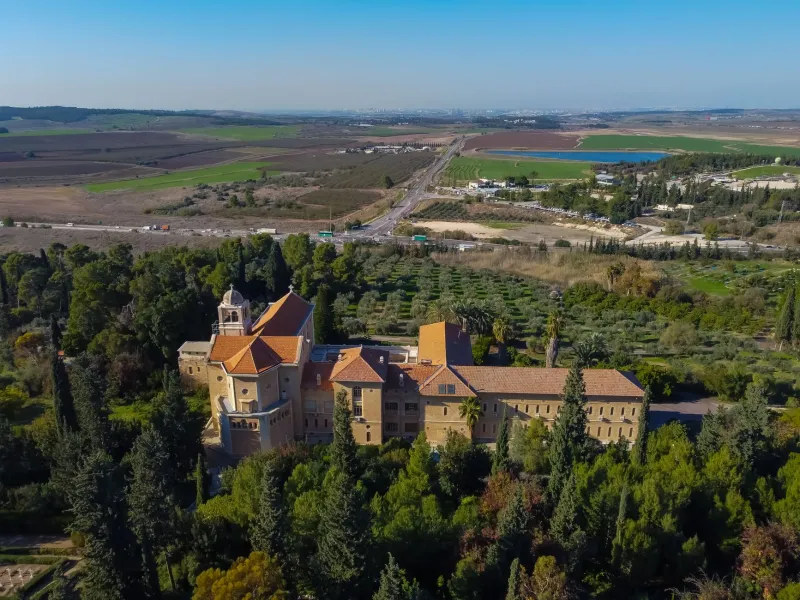
The Beit Sturman Museum in the Jezreel Valley exemplifies this approach. Rather than presenting the history of the Emek region through an authoritative, top-down narrative, the museum invites descendants of early settlers to contribute materials and perspectives, creating exhibitions that evolve as new voices are added. For American visitors accustomed to the polished permanence of major US institutions, this fluidity can feel refreshingly honest.
Technology as Storytelling Tool
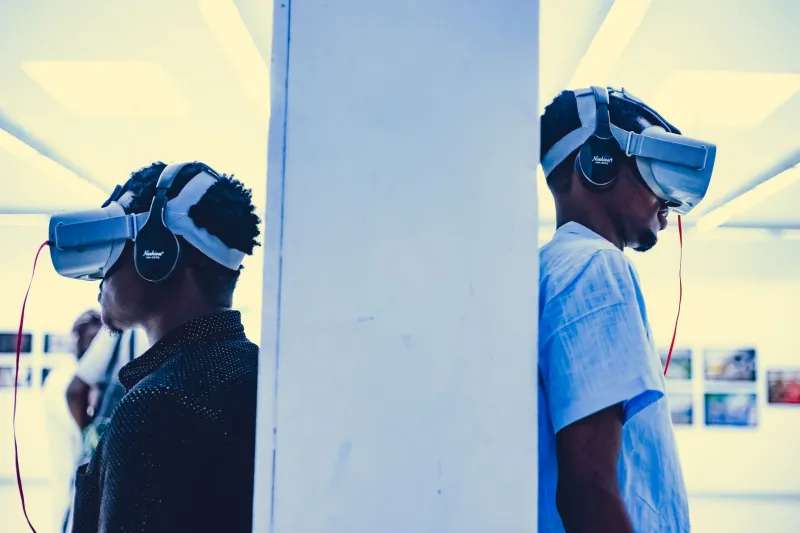
Israel's well-documented strength in the technology sector has had a measurable impact on its museum landscape. Several institutions have moved well beyond the now-familiar audio guide, deploying augmented reality, holographic projection, and AI-driven interactive displays to layer meaning onto physical objects.
The Palmach Museum in Tel Aviv stands as one of the most cited examples of immersive museum design anywhere in the world. Rather than displaying the history of Israel's pre-state fighting force through conventional exhibits, the museum guides visitors through a series of dramatically staged environments using actors' voices, projected imagery, and spatial sound design. Visitors do not merely observe history—they are placed within it.
Similar principles have been adopted, in varying degrees, at the Tower of David Museum in Jerusalem, where nighttime sound-and-light spectacles transform ancient stone walls into cinematic screens, and at Yad Vashem, Israel's Holocaust memorial and museum complex, where interactive testimony archives allow visitors to engage directly with survivor accounts through voice-recognition technology.
For US museum professionals, these examples raise productive questions. American institutions have generally been slower to embrace full environmental immersion, partly due to preservation concerns and partly due to curatorial conservatism. The Israeli model suggests that immersion and scholarly rigor are not mutually exclusive.
Archaeology Meets Audience Engagement
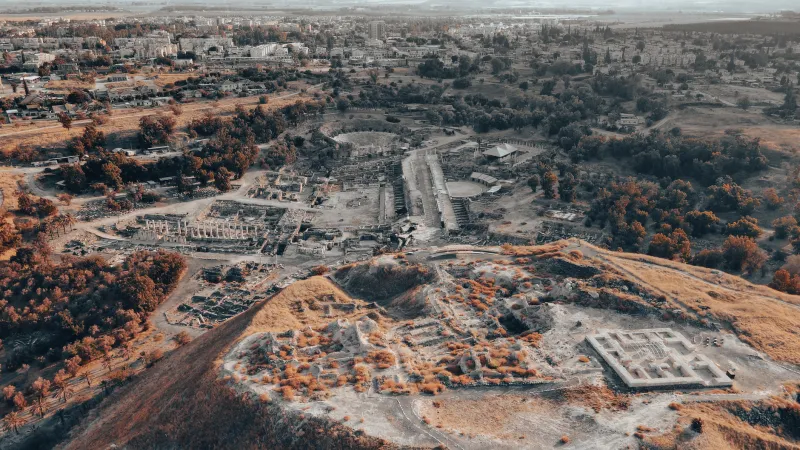
Israel's extraordinary archaeological density presents both an opportunity and a challenge for museum professionals. The country sits atop thousands of years of layered civilization, and new discoveries emerge with remarkable regularity. Translating those discoveries into meaningful public experiences—without reducing them to spectacle—requires considerable curatorial skill.
The Israel Museum in Jerusalem, the country's largest and most comprehensive cultural institution, has invested significantly in bridging the gap between academic archaeology and general audience engagement. Its model of the Second Temple-period Jerusalem, housed in the outdoor Shrine of the Book complex, allows visitors to grasp the physical scale of ancient urban life in a way no amount of descriptive text could achieve. Nearby, the Dead Sea Scrolls are presented within a purpose-built architectural environment designed to evoke the caves of Qumran where the scrolls were discovered.
Smaller regional museums have taken equally inventive approaches. The Hecht Museum at the University of Haifa integrates active archaeological research with public exhibition, allowing visitors to observe conservation work in progress and attend lectures by working scholars. This transparency—showing the process alongside the product—builds trust and intellectual engagement in ways that finished, static exhibitions rarely achieve.
What American Institutions Can Learn
The lessons emerging from Israel's museum sector are not simply technological. They are fundamentally philosophical.
First, the Israeli model consistently prioritizes emotional resonance alongside intellectual content. Exhibitions are designed not merely to inform but to provoke feeling—to make the weight of history personally felt rather than abstractly understood. American institutions, particularly those focused on difficult or contested histories, might consider how spatial design, sensory experience, and personal testimony can serve that goal more effectively than text panels alone.
Second, Israeli museums demonstrate a greater willingness to acknowledge complexity and ambiguity. Exhibitions at institutions such as the Yitzhak Rabin Center in Tel Aviv present contested historical narratives with a degree of candor that can seem striking to visitors expecting triumphalist national mythology. This intellectual honesty, while not universally practiced across all Israeli institutions, represents a standard worth aspiring to.
Third, the integration of community voice into curatorial practice—exemplified by the kibbutz heritage model—suggests that museums need not choose between professional authority and public participation. The most compelling Israeli exhibitions manage both simultaneously.
A Living Laboratory for Cultural Institutions Worldwide
Israel's museums occupy a uniquely pressured position. They serve a population with deep personal connections to the histories being displayed, operate within a society navigating profound questions of identity and memory, and attract millions of international visitors each year who arrive with widely varying expectations and prior knowledge.
That pressure has, paradoxically, produced innovation. When history is urgent and personal rather than distant and academic, the imperative to communicate it compellingly becomes impossible to ignore.
For American travelers visiting Israel, the country's museums offer an experience that extends well beyond sightseeing. They offer a model—imperfect and still evolving, but genuinely instructive—of what it looks like when cultural institutions decide that preservation is not enough, and that the past must be made to speak directly to the present.