Shared Walls, Contested Stories: How Israeli Museums Are Redefining Cultural Memory
There is a particular kind of discomfort that the best museums are willing to produce. Not the discomfort of poor design or confusing signage, but the productive unease that arises when a visitor is asked to hold two contradictory truths simultaneously, to acknowledge that the same landscape, the same artifact, the same century can carry entirely different meanings depending on who is doing the remembering. In Israel, a country where the relationship between history and identity is rarely abstract, several museums are now making exactly this kind of demand of their visitors — and the results are worth examining closely.
For American travelers arriving with preconceptions shaped by decades of geopolitical news coverage, these institutions offer something that headlines rarely can: sustained, nuanced engagement with the human textures of a deeply contested place.
The Eretz Israel Museum: A Campus in Conversation with Itself
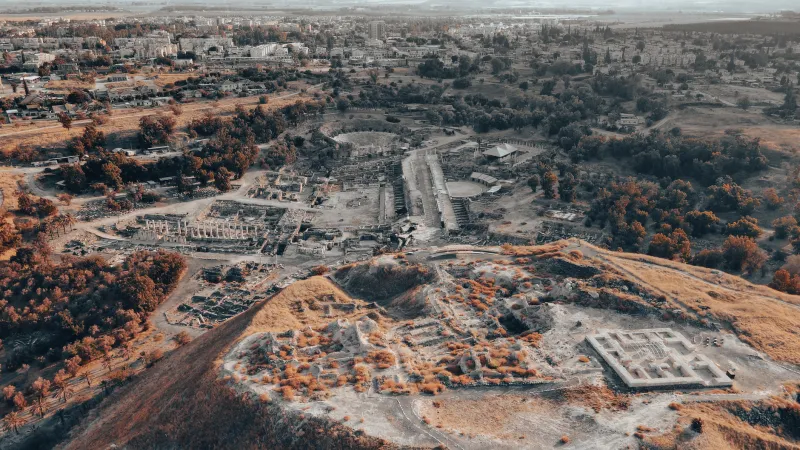
The Eretz Israel Museum in Tel Aviv is, in many respects, an institution in productive tension with its own founding assumptions. Established in 1953 with an explicitly Zionist cultural mandate — its name translates roughly as the Land of Israel Museum — it has evolved considerably in the decades since. Today, its sprawling campus houses pavilions dedicated to glassware, coins, ceramics, ethnography, and folklore, alongside an active archaeological tell that visitors can walk through in real time.
What distinguishes the museum in the current period is a curatorial willingness to complicate its own origin story. Recent temporary exhibitions have incorporated oral histories from Palestinian communities displaced during the 1948 war, placed in deliberate dialogue with testimonies from Jewish immigrants of the same period. The effect is not one of false equivalence but of genuine historical density — a recognition that the land the museum sits on has been home to multiple peoples whose experiences deserve acknowledgment.
Curators at the museum have spoken publicly about the difficulty of this work, noting that exhibition proposals touching on Palestinian history regularly generate institutional debate. That debate, they suggest, is itself a sign of health. Museums that never argue about what to show are museums that have stopped thinking.
Contemporary Art Spaces and the Politics of Representation
Beyond the established institutions, a constellation of smaller contemporary art spaces in Tel Aviv, Haifa, and Jerusalem has been quietly pushing the boundaries of representational practice for the better part of two decades. The Jaffa-based galleries operating in the mixed Jewish-Arab city have been particularly active in commissioning work that refuses easy categorization along national or ethnic lines.
Artists like Ahlam Shibli, whose photographic work examines displacement and domesticity across Arab communities in Israel and the occupied territories, have been exhibited in Israeli institutional contexts that would have been unimaginable a generation ago. The reception of such work is not uniformly enthusiastic — exhibitions have been protested, funding withdrawn, and curatorial staff have occasionally faced political pressure. Yet the exhibitions continue, and their audiences, which include significant numbers of American tourists and scholars, continue to grow.
The significance of this for American visitors is worth pausing on. The United States has its own fraught relationship with museum representation — debates over Native American collections, the politics of Confederate monuments, and the ongoing reckoning with how African American history is displayed in national institutions are all live questions in the American cultural landscape. Encountering Israeli institutions grappling with analogous challenges in a different key can offer American visitors a clarifying mirror, a way of thinking about their own cultural conflicts from a productive distance.
The Yad Vashem Question
Any honest discussion of Israeli museums and contested narratives must contend with Yad Vashem, the Holocaust memorial and museum complex on the western edge of Jerusalem. As the world's preeminent institution dedicated to Holocaust memory, Yad Vashem occupies a category of its own, and its curatorial decisions carry weight far beyond Israel's borders.
In recent years, the institution has made increasingly deliberate efforts to address the relationship between Holocaust memory and the founding of the State of Israel — a connection that is historically significant but also ideologically charged. Newer exhibition elements have incorporated voices from survivors who did not immigrate to Israel, complicating a narrative that once ran more directly from persecution to national redemption. The institution has also expanded its documentation of non-Jewish victims, including Roma, LGBTQ individuals, and political prisoners, in ways that align with evolving international standards of Holocaust education.
For American visitors — particularly those from Jewish communities where Yad Vashem holds deep personal significance — these curatorial evolutions can be surprising. They represent, however, exactly the kind of ongoing self-examination that distinguishes a living institution from a monument.
What Shared Spaces Actually Require
The phrase "shared spaces" risks becoming a kind of curatorial euphemism — a way of signaling good intentions without necessarily delivering on them. It is worth being precise about what genuine multi-perspectival museum work actually demands.
It requires, first, that the institution accept a degree of institutional discomfort. Exhibitions that present Palestinian history alongside Israeli history will generate criticism from constituencies who feel that any acknowledgment of Palestinian experience is a political concession. Institutions that are unwilling to absorb that criticism will not produce genuinely shared spaces — they will produce the appearance of them.
It requires, second, that the communities whose histories are being represented have meaningful input into how those histories are framed. The difference between a museum that displays Palestinian artifacts and a museum that collaborates with Palestinian scholars and community members in interpreting those artifacts is not a small one. Several Israeli institutions are moving toward the latter model, though progress is uneven.
It requires, third, that American visitors arrive with a degree of intellectual humility — a willingness to have their existing frameworks challenged rather than confirmed. The most valuable museum experiences are rarely the most comfortable ones.
Why This Matters to American Travelers
The United States sends more tourists to Israel than almost any other country outside of the immediate region, and American philanthropic support underwrites a significant portion of Israeli cultural infrastructure. American visitors are not passive observers of Israeli cultural life — they are participants in it, and their expectations shape what institutions feel empowered to do.
When American visitors seek out and support institutions that are doing the difficult work of multi-perspectival representation, they send a signal that this work is valued. When they limit their visits to sites that confirm pre-existing narratives, they send a different signal. The choice of where to spend an afternoon in a museum is, in this sense, a genuinely consequential one.
Israel's museums are, at their best, among the most intellectually serious institutions in the world. The ones that are willing to hold complexity — to show the Roman mosaic and the Bedouin tent, the immigrant memoir and the displacement narrative, in the same breath — are offering something rare. American visitors would do well to seek them out.