Seven Israeli Museums That Reveal the Ancient World Beyond the Famous Scrolls
For most American visitors arriving in Israel, the itinerary nearly writes itself: Jerusalem's Old City, the Western Wall, Masada, and — if scholarly inclinations allow — the Israel Museum's Shrine of the Book, where the Dead Sea Scrolls rest in climate-controlled reverence. These are extraordinary destinations, and rightly celebrated. Yet Israel's archaeological landscape is so densely layered that even a lifetime of visits would barely scratch its surface. Beneath the well-worn tourist trails lie institutions of remarkable depth, each preserving evidence of civilizations that flourished, traded, warred, and disappeared across millennia.
The following seven museums and specialized collections represent some of the most compelling — and undervisited — archaeological resources available to travelers and scholars in Israel today.
1. The Rockefeller Archaeological Museum, Jerusalem
Established during the British Mandate period and opened in 1938, the Rockefeller Archaeological Museum in East Jerusalem remains one of the most architecturally striking institutions in the country. Its collection predates the founding of the modern state and includes artifacts excavated from sites across the Levant during the early twentieth century. Among its most significant holdings are carved ivories from Megiddo dating to the Late Bronze Age, stone reliefs from the palace of Hisham near Jericho, and an extensive assemblage of prehistoric tools from Mount Carmel caves. American visitors with an interest in the evolution of archaeological methodology will find the museum's historical context particularly illuminating.
2. Beit Shean National Park and Regional Museum
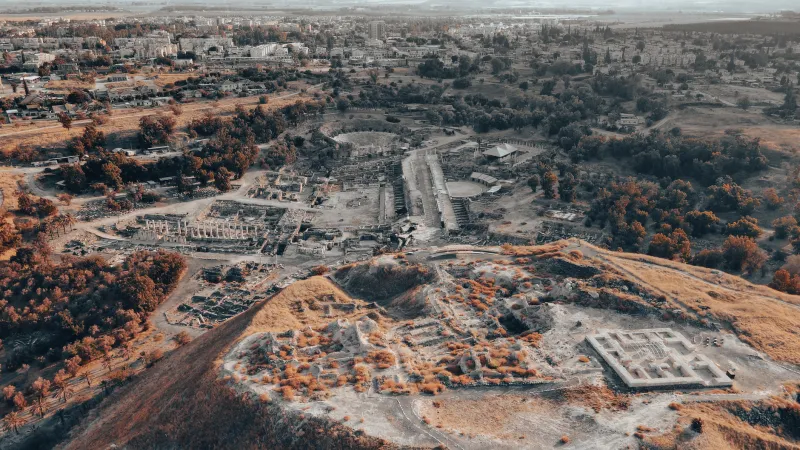
Located in the Jordan Valley, Beit Shean preserves one of the most extensively excavated urban sites in the entire Middle East. The accompanying regional museum contextualizes a city that was occupied almost continuously from the Chalcolithic period through the Byzantine era. Roman-period colonnaded streets, a well-preserved theater, and Byzantine mosaics are among the highlights. What distinguishes Beit Shean for scholarly visitors is the site's stratigraphic complexity — eighteen distinct occupation layers have been identified, each representing a different chapter in the city's long history.
3. The Nabatean Heritage Museum, Avdat
The Nabateans are among antiquity's most fascinating civilizations, and yet they remain largely unknown to general American audiences. This semi-nomadic Arab people built a sophisticated trading empire stretching from the Arabian Peninsula to the Mediterranean, and their capital at Petra in modern Jordan is justly famous. Less well known are the Nabatean cities of the Negev Desert, including Avdat — a UNESCO World Heritage Site — where a dedicated heritage museum interprets the culture's remarkable achievements in architecture, water harvesting, and long-distance commerce. The museum's exhibits on Nabatean incense trade routes offer a compelling counternarrative to the more militaristic histories that often dominate the region's archaeological storytelling.
4. The Hecht Museum, Haifa
Affiliated with the University of Haifa, the Hecht Museum occupies a unique position in Israel's cultural landscape: it is simultaneously a research institution and a public gallery. Its permanent collection includes prehistoric artifacts from Carmel caves, Canaanite and Israelite pottery, and a remarkable Bronze Age shipwreck recovered from the seabed off the Carmel coast. The ship, dating to approximately 1400 BCE, is displayed in a specially constructed gallery and represents one of the oldest vessels ever recovered in the eastern Mediterranean. For American visitors interested in maritime archaeology, the Hecht Museum offers an experience genuinely difficult to replicate elsewhere in the world.
5. The Capernaum Archaeological Site and Museum, Sea of Galilee
Capernaum, situated on the northern shore of the Sea of Galilee, is significant to multiple religious traditions and has been excavated extensively since the nineteenth century. The on-site museum, managed by the Franciscan Custody of the Holy Land, houses a carefully curated collection of architectural fragments, millstones, fishing implements, and synagogue carvings that illuminate daily life in a first-century Galilean fishing village. The museum's interpretive approach is notably restrained, allowing artifacts to speak for themselves rather than privileging any single theological reading — a curatorial choice that American visitors from diverse backgrounds tend to appreciate.
6. Eretz Israel Museum's Philistine Exhibition Galleries, Tel Aviv
The Eretz Israel Museum in Tel Aviv encompasses an entire archaeological tell within its grounds, and its specialized galleries address aspects of Canaanite and Philistine culture that rarely receive sustained attention. Recent excavations at sites like Ashkelon and Gath have dramatically revised scholarly understanding of Philistine civilization, revealing a sophisticated urban culture far removed from the pejorative connotations the name has acquired in modern usage. The museum's exhibition galleries present this revised picture with clarity and nuance, drawing on both Israeli and international research to offer visitors a genuinely updated perspective on a people long caricatured by history.
7. The Mosaic Treasure House, Caesarea Maritima
Caesarea Maritima, the port city built by Herod the Great along the Mediterranean coast, has yielded an astonishing quantity of Roman-period mosaic work over decades of excavation. The dedicated mosaic conservation facility and exhibition space at the site allows visitors to observe restoration work in progress alongside finished displays of geometric, figural, and inscriptional mosaics recovered from private homes, public buildings, and religious structures. The interpretive materials are available in English and are pitched at a level accessible to non-specialists, making this an ideal destination for American travelers without formal archaeological training.
Planning Your Visit
Several practical considerations are worth noting for American travelers intending to explore these institutions. Most sites are accessible by rental car, though guided tours from Tel Aviv or Jerusalem are available for several destinations. Visiting hours vary seasonally, and it is advisable to confirm schedules directly with each institution before departure. The Israel Antiquities Authority maintains an updated directory of licensed sites and museums at its official website, and the Israel Tourism Ministry offers regional itinerary suggestions that can help visitors cluster geographically proximate sites into efficient day trips.
For scholars and researchers, advance coordination with curatorial staff is generally welcomed and can unlock access to study collections not on public display. Several institutions, including the Hecht Museum and the Rockefeller, maintain active research affiliations with American universities and may be able to facilitate introductions for visiting academics.
Israel's archaeological heritage is, in the truest sense, a global inheritance. These seven institutions are among the most dedicated custodians of that inheritance, and they deserve a place on every serious traveler's itinerary.