Planning Your Visit by Season: A Calendar Guide to Israel's Best Museum Exhibitions
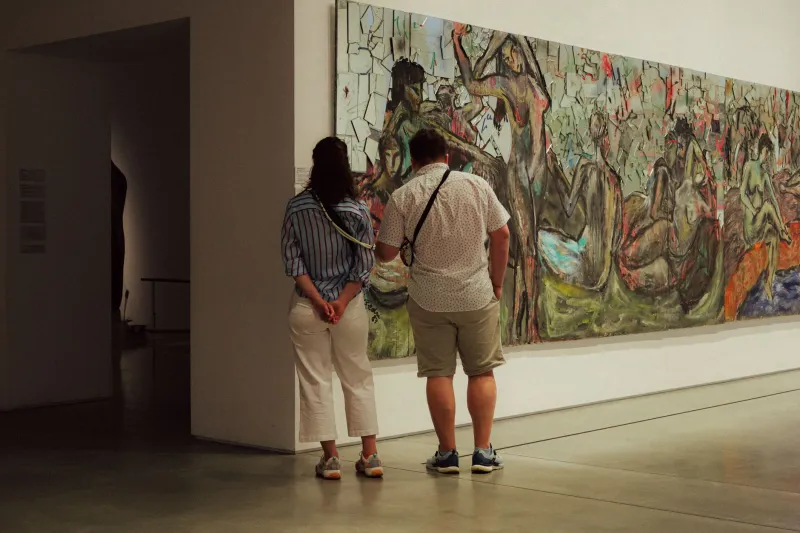
Americans who have spent time in major U.S. museum cities — New York, Chicago, Los Angeles — understand that a great museum is never quite the same place twice. The Metropolitan Museum of Art in winter, anchored by a blockbuster loan exhibition from a European partner institution, offers a fundamentally different experience from the Met in summer, when smaller thematic shows occupy the galleries and the crowds thin out. Israel's museum landscape operates on a similar principle, but with its own distinct rhythms shaped by the Jewish calendar, the academic year, the tourist season, and a remarkably active network of international curatorial partnerships.
For the visitor who wants to see Israel's museums at their most alive — not just their permanent collections, impressive as those are — timing matters enormously.
Understanding the Difference Between Permanent and Temporary
Before mapping the seasons, it is worth clarifying a distinction that first-time museum visitors sometimes find confusing. A permanent collection comprises the objects and works that a museum owns and displays on an ongoing basis. These galleries change slowly; a significant rehang or reinstallation of a permanent collection is itself a major event, typically announced months in advance. Temporary exhibitions, by contrast, are time-limited presentations — often built around loans from other institutions, private collections, or a single artist's body of work — that occupy dedicated galleries for a period typically ranging from six weeks to six months.
In Israel, the line between these two categories is occasionally blurred in productive ways. Several institutions mount what might be called "semi-permanent" thematic installations that run for a year or more before being replaced. The distinction matters practically because temporary exhibitions almost always require advance planning: they have fixed opening and closing dates, they may require separate ticketing, and they are, by definition, impossible to see on a return visit once they have closed.
Autumn: The Cultural Season Opens
The period following the High Holiday season — roughly mid-October through December — functions as the opening of Israel's main cultural calendar. Israeli institutions, like their American counterparts, tend to schedule their most ambitious and well-resourced temporary exhibitions for this window, when domestic audiences are returning from summer and international visitors begin arriving for cooler-weather travel.
The Israel Museum in Jerusalem typically launches its major autumn exhibition in October or November. These shows frequently involve significant international loans and often connect Israel's ancient heritage to broader Mediterranean or Near Eastern narratives. For the American visitor interested in archaeology and ancient history, autumn at the Israel Museum is reliably rewarding.
In Tel Aviv, the Tel Aviv Museum of Art uses the autumn season to open exhibitions in its contemporary and modern galleries that will run through the winter months. The museum has developed a strong track record for presenting Israeli artists in dialogue with international peers, and autumn openings often coincide with the broader Israeli art world's active season of gallery openings and art fairs.
Practical note for American travelers: flights to Israel in October and November are generally less expensive than during the summer peak, and the weather — warm days, cool evenings — is widely considered the most pleasant of the year.
Winter: Depth Over Spectacle
December through February is low season for international tourism in Israel, which has real advantages for the museum visitor. Galleries are less crowded, staff have more time for extended conversations, and the experience of standing alone before a significant object — a luxury that is genuinely difficult to achieve in summer — becomes more accessible.
The winter months are also when many Israeli museums schedule their more scholarly or specialized exhibitions: shows that require a degree of prior knowledge to fully appreciate, or that address subjects of particular interest to academic visitors. Archaeological museums affiliated with universities, including those at Hebrew University and Tel Aviv University, often mount winter exhibitions tied to the academic semester and the presentation of recent excavation results.
The Eretz Israel Museum in Tel Aviv, a sprawling campus of pavilions dedicated to different aspects of the country's material culture, tends to use winter months for rotating installations within its permanent galleries — a quieter form of programming that rewards visitors who are willing to look carefully rather than move quickly.
Spring: The Most Rewarding Window for Many Visitors
March through May represents what many seasoned Israel travelers regard as the single best window for museum visits. The weather is excellent, the Easter and Passover holiday rushes are relatively brief and predictable, and the cultural calendar is full without being overwhelming.
Spring is when Israel's design and architecture community tends to be most visible in museum programming. The Design Museum Holon, one of the country's most architecturally distinctive institutions and a genuine contribution to the international design museum landscape, frequently schedules its most design-forward temporary exhibitions for spring opening. American visitors with a professional or personal interest in contemporary design will find the Holon's spring programming particularly aligned with international conversations happening in New York and Los Angeles.
Spring is also the season during which smaller regional museums — in Haifa, Beer-Sheva, and the Galilee — are most likely to have active temporary programming. The Haifa Museum of Art, often underestimated by visitors who focus exclusively on Jerusalem and Tel Aviv, has mounted exhibitions of genuine curatorial ambition, particularly in the areas of photography and video art.
Summer: Crowds, Blockbusters, and Emerging Voices
June through August brings the largest volume of international visitors, including a substantial number of American families traveling during the school-free months. Israel's major institutions respond with programming calibrated for broad accessibility: large-scale exhibitions with strong visual impact, extended opening hours, and robust family programming.
For visitors specifically interested in discovering emerging Israeli artists, summer can paradoxically be a productive time to look beyond the flagship institutions. Smaller contemporary art spaces — many concentrated in Tel Aviv's Florentin neighborhood and in the revitalized areas of Jaffa — tend to schedule group shows and emerging artist presentations during the summer months, partly to capture the increased foot traffic and partly because younger artists are more likely to be available for openings and programming.
Practical Advice for American Planners
Several habits will serve the American museum visitor well regardless of season. First, check the specific exhibition calendar of any institution you plan to visit at least four to six weeks before departure; Israeli museum websites are generally well-maintained and list temporary exhibitions with accurate dates. Second, consider purchasing combination tickets or museum passes where available — several Israeli cities offer multi-institution passes that provide meaningful savings. Third, be aware that most Israeli museums are closed on Saturdays (Shabbat) and on major Jewish holidays; this is a scheduling reality that catches many American visitors off guard.
Finally, resist the temptation to treat Israel's museums as a checklist. The country's cultural institutions reward slow, attentive engagement far more generously than they reward rapid accumulation of stamps on a tourist itinerary. A morning spent with a single remarkable temporary exhibition, followed by a conversation with a gallery educator, will stay with you longer than a rushed circuit of six permanent collections. Plan accordingly.