Roots in the Soil: How Kibbutz Museums Are Keeping Israel's Collective Memory Alive
Most visitors to Israel plan their cultural itineraries around the Israel Museum in Jerusalem, the Tel Aviv Museum of Art, or the landmark archaeological sites that draw international scholars and curious travelers alike. Yet tucked between fields of sunflowers, date palms, and irrigation canals across the Galilee, the Negev, and the Jezreel Valley, a quieter and often overlooked museum culture has taken root. Across more than a hundred kibbutzim, residents have established community-run institutions that document their own histories with a candor and intimacy that no centralized national museum could replicate.
These are the kibbutz museums — modest in scale, extraordinary in specificity, and deeply revealing about the social experiment that helped shape modern Israel.
What Makes a Kibbutz Museum Different
To understand why these institutions matter, it helps to appreciate what a kibbutz actually is. Founded on principles of collective ownership, communal living, and agricultural labor, the kibbutz movement emerged in the early twentieth century as a radical reimagining of Jewish life. At its peak, the movement encompassed hundreds of communities and played an outsized role in building the infrastructure of the Israeli state. Today, many kibbutzim have shifted toward privatization, and the original socialist model survives in modified form. The museums that communities have created in response to this transformation are, in many respects, acts of deliberate cultural rescue.
Unlike conventional museums, which are typically governed by professional curatorial boards and state funding mechanisms, kibbutz museums are frequently managed by longtime residents — sometimes the very people whose photographs, tools, and personal letters line the display cases. This creates an atmosphere unlike anything an American visitor is likely to encounter at the Smithsonian or the Metropolitan Museum of Art. The boundary between the institution and its subject dissolves almost entirely. The woman explaining the communal dining hall exhibit may have eaten there for sixty years. The man describing the early agricultural machinery may have operated it himself as a young man.
This proximity to living memory gives kibbutz museums an authenticity that is both their greatest strength and, inevitably, a methodological challenge. Curation is an act of selection, and when the curators are also the subjects, the process of deciding what to commemorate and what to set aside becomes especially freighted.
Agricultural Heritage as Cultural Artifact
A substantial portion of what kibbutz museums preserve falls under the category of agricultural heritage — an area that national institutions have historically underrepresented. Visitors to the Yifat Regional Museum in the Jezreel Valley or the Beit Sturman nature and history museum near Ein Harod encounter exhibits that treat farming implements, irrigation innovations, and land cultivation techniques as objects of genuine cultural significance. Plows, seed drills, water pumps, and the ledgers that tracked communal crop yields are displayed with the same seriousness that a major art museum might devote to a Renaissance painting.
For American visitors accustomed to frontier museums and agricultural heritage centers in states like Iowa or Nebraska, there is something immediately recognizable in this impulse to memorialize working life. The kibbutz equivalent, however, carries an additional ideological dimension. These tools were not simply instruments of subsistence farming; they were expressions of a political philosophy that held collective labor to be morally superior to private enterprise. Understanding the object means understanding the idea behind it.
Preserving Socialist History Without Apology
One of the most striking qualities of kibbutz museums is their willingness to engage directly with the political history of the movement — including its most utopian and, in retrospect, most contested ambitions. Exhibits frequently address the early kibbutz debates over child-rearing practices, the communal children's houses where children slept separately from their parents, and the fierce internal arguments about individual versus collective rights that divided communities for decades.
These are not comfortable histories, and mainstream Israeli cultural institutions have not always known what to do with them. The kibbutz museums, by contrast, tend to approach this material with a mixture of pride and nuance that reflects the communities' own complicated relationships with their past. Visitors will find photographs of communal assemblies, political pamphlets from the 1930s, and oral history recordings that capture the full ideological fervor of the founding generation alongside the disillusionment of those who watched the original vision gradually erode.
For American visitors with an interest in the history of utopian communities — from the Shaker settlements of New England to the intentional communities of the 1960s counterculture — the kibbutz museum offers a remarkably well-documented case study in collective life, with the added complexity of its entanglement with state-building and national identity.
Regional Variation and Hidden Specializations
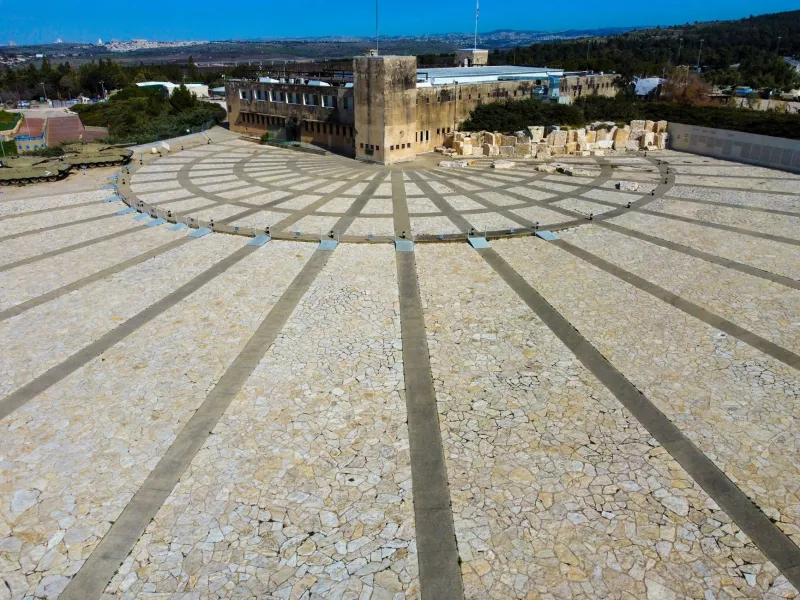
Not all kibbutz museums follow the same template. Regional geography and community history have produced a remarkable diversity of institutional focus. Kibbutz Afikim, near the Sea of Galilee, maintains a museum with particular emphasis on the history of the Jordan Valley's water systems. Kibbutz Degania, often called the "mother of kibbutzim" and the first to be established, in 1910, houses a museum that functions almost as a founding document of the entire movement. Kibbutz Lohamei HaGeta'ot — founded by survivors of the Warsaw Ghetto Uprising — is home to the Ghetto Fighters' House Museum, one of the most significant Holocaust memory institutions in the world, demonstrating how a kibbutz museum can transcend its immediate community to address universal historical questions.
This variety means that planning a visit requires some research. American travelers who invest the time to identify which kibbutz museums align with their specific interests — whether that is agricultural history, labor movement politics, Holocaust memory, or the archaeology of the Jordan Valley — will be rewarded with experiences that no standard tour itinerary provides.
Planning a Visit: Practical Considerations
Kibbutz museums vary considerably in their accessibility to outside visitors. Some, like the Ghetto Fighters' House, operate as fully public institutions with professional staff, multilingual materials, and regular programming. Others function on a more informal basis, opening by appointment or maintaining limited hours that reflect the rhythms of community life rather than tourist demand. Contacting a museum in advance is strongly advisable, and in some cases a community member may serve as both guide and host.
Hebrew language fluency is not required — many kibbutz museums have made meaningful investments in English-language materials, particularly those that receive regular visits from diaspora Jewish communities and international scholars. That said, visitors who arrive with some background knowledge of kibbutz history will find the experience considerably richer. Several accessible English-language histories of the movement are available and well worth reading before departure.
Those traveling by car will find kibbutz museums most readily incorporated into a broader regional itinerary. The Jezreel Valley, the Galilee, and the area around Beit She'an offer particularly dense concentrations of communities with established museums, and the landscape itself — the agricultural fields, the communal architecture, the water towers that have become an unofficial symbol of kibbutz life — provides essential context for what the exhibitions describe.
An Israel That Mainstream Tourism Often Misses
Israel's cultural landscape is far more layered than the sites that appear on most travel lists. The kibbutz museum movement represents one of the most distinctive and underappreciated dimensions of that landscape — a grassroots heritage preservation effort sustained not by government mandate or institutional prestige, but by communities that have decided their own stories are worth telling carefully. For American visitors seeking a fuller, more textured understanding of how the modern State of Israel came to be, these modest institutions offer something that no grand national museum can fully replicate: the living memory of the people who built it.