Hands That Heal History: Inside the Quiet Studios Where Israel's Broken Past Is Made Whole
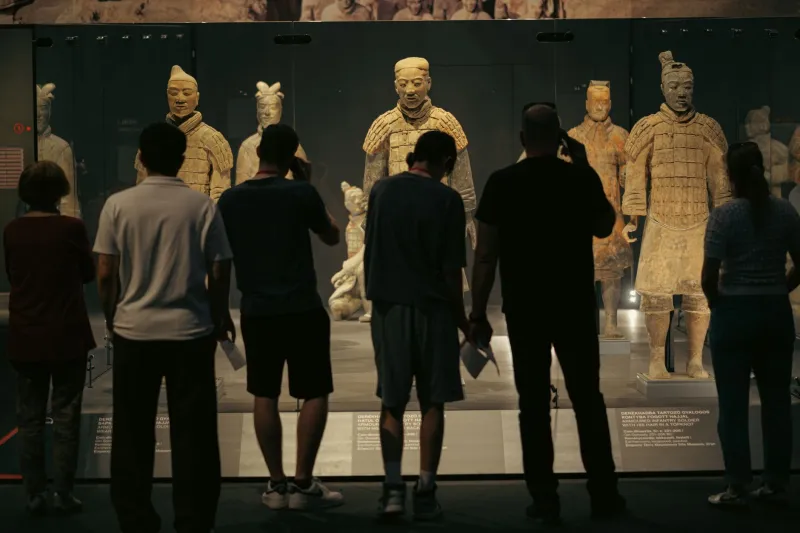
The gallery label reads simply: Canaanite storage jar, circa 1400 BCE. What it does not tell you is that the vessel standing serenely behind the glass was, not long ago, 214 separate fragments packed into a cardboard tray, each piece catalogued, photographed, and assigned a number in permanent ink. The journey from that tray to this display case took one conservator the better part of eight months.
This is the world most museum visitors never see—the dimly lit, chemical-scented studios where Israel's archaeological restorers practice what might be the most exacting craft in the cultural heritage field. For American travelers accustomed to polished, camera-ready exhibitions, a glimpse behind the scenes at institutions such as the Israel Antiquities Authority's conservation laboratories or the restoration workshops supporting the Israel Museum in Jerusalem can be genuinely revelatory.
The Archaeology of Reassembly
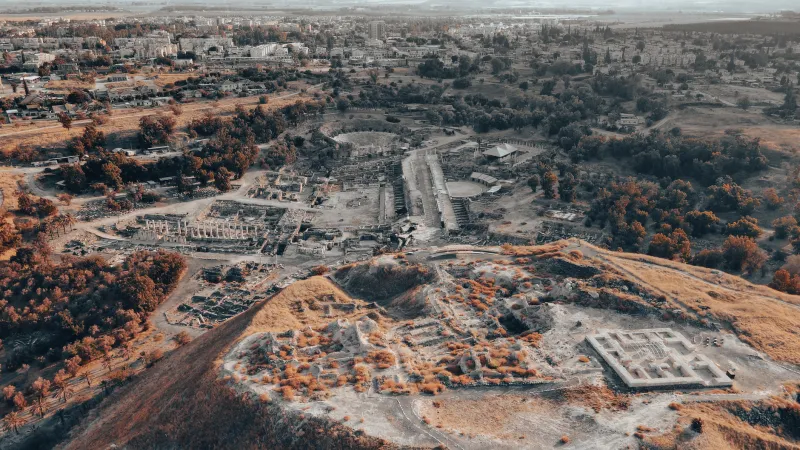
When an excavation team in the Jezreel Valley or along the Negev highlands uncovers a ceramic scatter, the object's story is far from over—in many respects, it is only beginning. Field archaeologists carefully lift each shard, record its precise location in a site grid, and transfer the fragments to a laboratory where the slow, methodical work of reconstruction commences.
Restorers describe the initial sorting phase as something between a jigsaw puzzle and a forensic investigation. Pieces are grouped by clay color, surface texture, firing temperature, and decorative motif. Experienced hands can often identify a vessel's approximate region of manufacture simply by feeling the grit ratio in the clay body—a skill that takes years to develop and cannot be taught from a textbook.
"You are essentially reading the object," explains one senior conservator at a Jerusalem-based laboratory who has spent more than two decades working on ceramic assemblages from Iron Age sites. "Every surface tells you something. A fire cloud on the base suggests where it sat in the kiln. A wear pattern on the rim tells you how it was handled. Before you glue a single piece, you need to understand what the object was trying to be."
Mosaics: The Most Unforgiving Medium
If ceramic restoration demands patience, mosaic conservation demands something closer to philosophical resolve. The tessellated floors and wall panels recovered from Byzantine-era synagogues, Roman villas, and early Christian churches across Israel represent some of the ancient world's most ambitious decorative programs—and some of its most catastrophically fragmented survivors.
The restoration of mosaic panels involves an entirely different technical vocabulary. Conservators must stabilize the original lime mortar bedding, clean individual tesserae—the small cut stone or glass tiles—without disturbing their set positions, and make carefully documented decisions about whether and how to fill lacunae, the gaps where tiles have been lost entirely.
At institutions such as the Caesarea Maritima archaeological park and the Beit Alpha Synagogue, visitors can observe restored mosaic floors that appear seamless from a respectful viewing distance. Move closer, however, and the honest hand of the conservator becomes visible: missing sections are filled with neutral-toned modern material, clearly distinguishable from the ancient work, in accordance with international conservation ethics that require all interventions to be reversible and transparent.
This principle—reversibility—is one of the field's cardinal rules. Nothing applied to an ancient object during restoration should be impossible to remove. Adhesives are chosen for their long-term stability but also for their solubility; fills are tinted to approximate but never replicate the original; every decision is documented in a conservation report that becomes part of the object's permanent record.
Architectural Fragments and the Problem of Scale
Perhaps the most visually dramatic restorations involve architectural elements: column capitals, carved lintels, decorated friezes, and inscribed stone blocks recovered from collapsed structures. These pieces present challenges of sheer scale that ceramic conservators rarely encounter. A single carved capital from a Second Temple–period synagogue may weigh several hundred pounds, require specialized lifting equipment to manipulate safely, and demand that restorers work in physical positions that strain the body over long sessions.
The Israel Museum's ongoing work with architectural fragments from excavated sites in Jerusalem and the Galilee has pioneered the use of three-dimensional scanning to assist in reconstruction planning. Before any physical joining is attempted, digital models allow conservators to test hypothetical fits, identify stress points, and calculate load-bearing requirements for display mounts. What once required trial-and-error handling of irreplaceable stone can now be rehearsed entirely in a virtual environment.
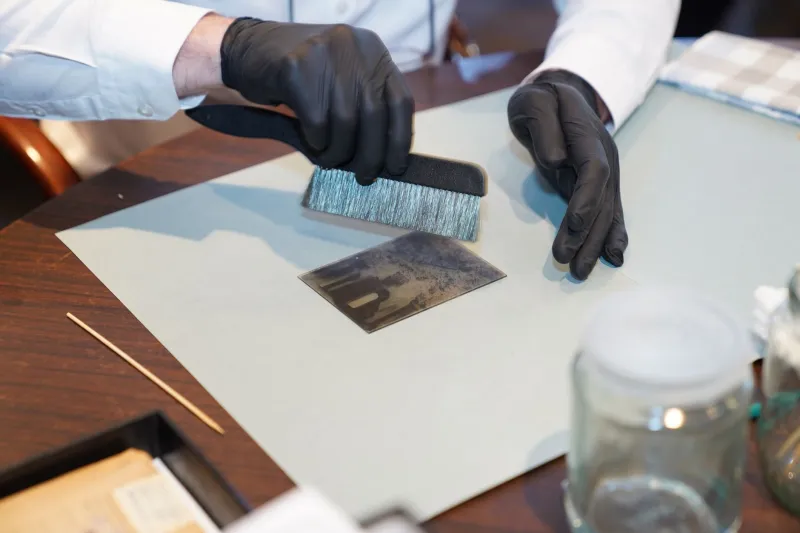
This fusion of traditional craft knowledge and digital technology characterizes the best Israeli conservation studios. A restorer might spend a morning hand-mixing a lime-based consolidant according to a recipe refined over decades, then spend the afternoon analyzing micro-samples under a scanning electron microscope. The two activities are not in tension; they are complementary dimensions of the same disciplined inquiry.
The Ethics of Interpretation
Restoration is never purely technical. Every decision about how much to reconstruct, how to present missing elements, and how to contextualize an object for a general audience carries interpretive weight. A conservator who fills too aggressively risks creating a fiction; one who fills too conservatively may leave visitors unable to read the object's original form or function.
This tension is particularly acute in Israel, where many objects carry not only aesthetic but religious, national, or communal significance. A restored Torah ark panel from a destroyed synagogue is not merely an artifact; it is a remnant of a community's devotional life. The conservator working on such a piece must balance technical fidelity with a sensitivity to the object's ongoing meaning for living communities.
Museum education staff at several Israeli institutions have begun incorporating conservation ethics into their public programming, inviting visitors to consider these questions directly. Some institutions have installed viewing windows into working conservation studios, allowing gallery-goers to observe restorers in real time—demystifying the process while underscoring the seriousness with which it is undertaken.
What American Visitors Can Take Away
For travelers from the United States, where museum conservation is largely invisible infrastructure, Israel's relative openness about the restoration process offers a valuable reorientation. The objects on display in Israeli museums are not simply old things that survived; they are the results of sustained human effort, scientific inquiry, and ethical deliberation.
Understanding this changes how one stands before a reconstructed amphora or a reassembled mosaic medallion. The ancient craftsperson who made the original object and the modern conservator who reassembled it are both present in what you see—separated by millennia but united by the same fundamental impulse to make something whole.
Several Israeli museums, including the Rockefeller Archaeological Museum in Jerusalem and the Eretz Israel Museum in Tel Aviv, offer periodic behind-the-scenes tours that include visits to conservation areas. For visitors with a professional or scholarly interest in the field, advance arrangements through curatorial staff can sometimes yield more extended access. Those planning a trip are encouraged to inquire directly with individual institutions well before their travel dates.
The display case, it turns out, is not the end of the story. It is simply where the story becomes visible.